
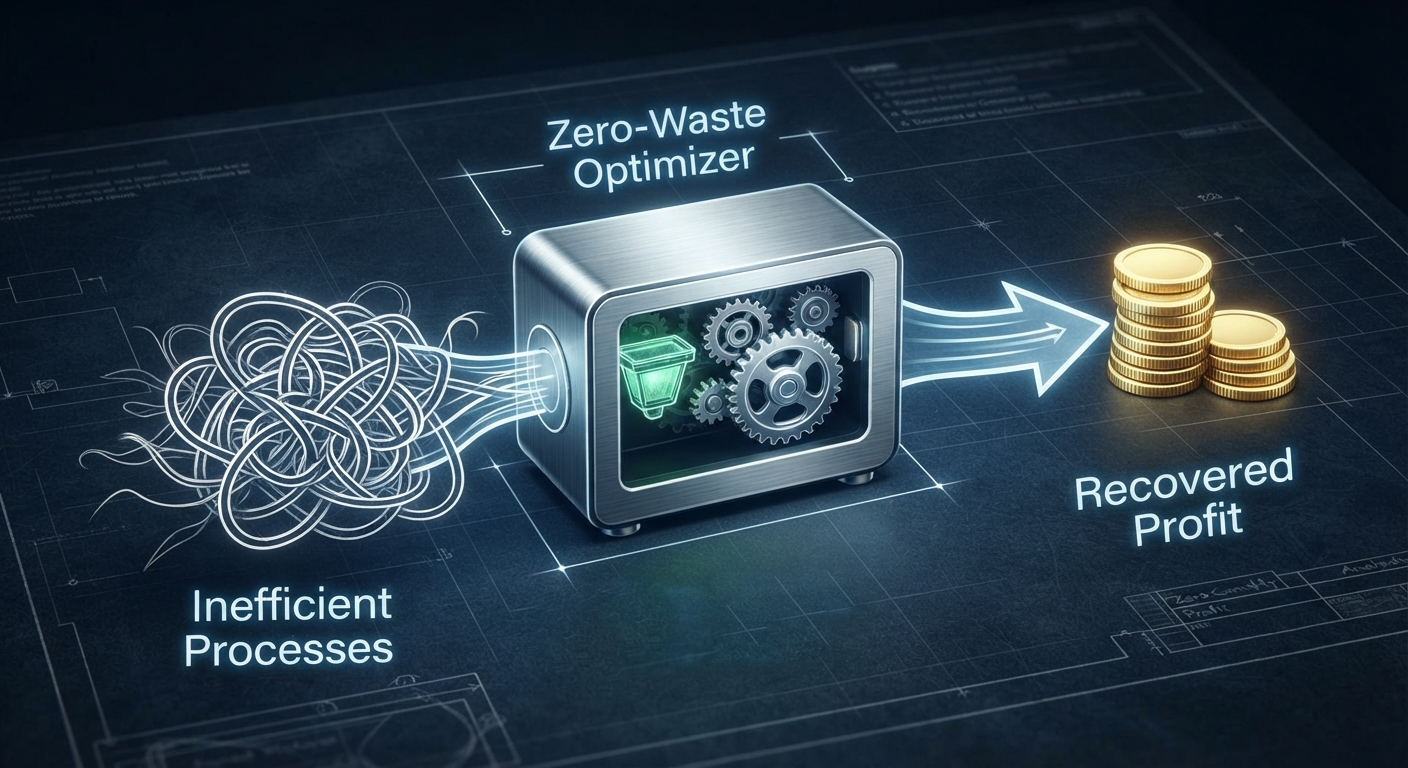
Zero-Waste Operations: Trimming Hidden Financial Fat in Modern Small Businesses
In periods of economic expansion, business owners often develop bad habits. When revenue flows freely and top-line growth masks underlying inefficiencies, profit leaks are easy to ignore. Software subscriptions multiply unchecked, redundant administrative workflows are propped up by extra headcount, and supply chain friction is absorbed as the cost of doing business.
When the economic climate tightens, that casual approach to overhead becomes a fatal vulnerability.
Most companies react to margin compression by slashing budgets indiscriminately or freezing hiring across the board. That blunt force approach usually damages morale, disrupts core capabilities, and fails to address the actual structural waste draining profitability. True financial resilience is not about aggressive cutbacks. It is about implementing a zero-waste operational audit that systematically eliminates invisible friction without sacrificing growth capacity.
The Anatomy of Hidden Operational Fat
Financial waste in a mature small business rarely looks like reckless spending. It usually hides in plain sight as standard operating procedure.
Consider the modern software stack. Over a few years of rapid scaling, teams accumulate dozens of specialized SaaS tools. Departments adopt platforms independently, resulting in overlapping capabilities. You might have one tool handling customer feedback, another managing support tickets, and a third tracking project milestones, with zero data synchronization between them. Employees waste hours manually copying information across platforms, while the business pays recurring monthly fees for redundant licenses that half the team never touches.
Administrative bloat functions the same way. Processes that made sense when the company was half its current size are maintained out of habit rather than necessity. If a report requires three layers of human review before publication, you are paying a massive productivity tax for an outdated layer of bureaucracy.
Auditing the Software and Tooling Ecosystem
Trimming financial fat begins with a ruthless inventory of your technological infrastructure. Every software subscription, cloud service, and API integration must be brought onto a single ledger and evaluated against a strict utility threshold.
Start by tracking actual active usage rather than purchased seat counts. You will frequently discover that twenty or thirty percent of your paid licenses are assigned to inactive users or former employees. Next, look for consolidation opportunities. Modern all-in-one platforms or tightly integrated ecosystems often replace three or four disparate tools, instantly reducing monthly overhead while eliminating the friction of manual data transfer.
This audit should not be treated as a one-time emergency measure. Building a zero-waste culture requires establishing a quarterly software review where every department head must justify the operational ROI of the tools they rely on.
Streamlining Workflows to Protect Margins
Beyond software, operational waste lives in inefficient workflows. Every time a process requires manual intervention where automation should exist, your business bleeds money and speed.
Map your core business workflows from end to end. Look for bottlenecks where information stalls or where human error consistently forces rework. If your team spends hours every week formatting spreadsheets or reconciling billing discrepancies, you have a structural failure that requires code or automation, not more human oversight.
When you replace manual bottlenecks with automated data pipelines, you achieve two goals simultaneously. You lower your cost of operations, and you dramatically accelerate your execution speed. Your team stops acting as data entry clerks and starts focusing on high-value initiatives that drive revenue.
Trimming Without Cutting Muscle
The greatest risk in financial optimization is accidentally cutting into the muscle of the business while trying to remove fat. Indiscriminate budget cuts weaken product quality, degrade customer support, and burn out the remaining team members who now have to carry a heavier load.
A zero-waste operational strategy is surgical. You protect every asset directly tied to revenue generation, customer acquisition, and product innovation. You eliminate the friction, the redundancy, and the administrative bloat that exists purely to manage internal complexity.
By cleaning up your operational architecture, you protect your margins against external market shifts and build a leaner, more agile enterprise.