
Owning the Audience: Building Proprietary Distribution Channels in a Rent-Seeking Web
Most modern digital businesses are built on rented land. Founders spend years cultivating a massive following on social media platforms, optimizing their content for shifting search engine algorithms, or building storefronts inside third party marketplaces. It feels like real progress when the metrics climb, engagement spikes, and revenue starts flowing through these platforms.
That sense of security is entirely an illusion.
Algorithm updates happen overnight. Platform fees increase without warning. Account suspensions can wipe out years of brand building with zero recourse or explanation. When your entire distribution model depends on the whims of a multi-trillion-dollar gatekeeper, you do not own a business. You operate at the mercy of a landlord who can change the rent or lock the doors whenever it suits their balance sheet.
Long-term defensibility requires a deliberate migration away from rented platforms and toward proprietary distribution channels. Building an independent ecosystem ensures that no algorithm change, policy shift, or corporate acquisition can sever your direct connection to the people who matter most.
The Illusion of Algorithm Dependent Scale
For the past decade, platforms have encouraged creators and founders to trade ownership for reach. They offered massive organic distribution in exchange for keeping users inside their walled gardens. It was a seductive trade-off. Why spend years building an independent subscriber base when you could publish a video or post an article and instantly reach hundreds of thousands of people?
The trap of that model is now painfully obvious. Organic reach on major social and search networks has steadily declined as platforms prioritize paid advertising and keep user attention for themselves. Brands that relied entirely on social algorithms suddenly find their engagement dropping by ninety percent because a backend ranking parameter shifted.
Worse, you have no data on your audience. If an algorithm decides to suppress your content, you cannot email your followers to let them know where to find you. You are locked out of your own community, entirely dependent on buying back your own audience through increasingly expensive ad campaigns.
Architecting Direct Subscriber Pipelines
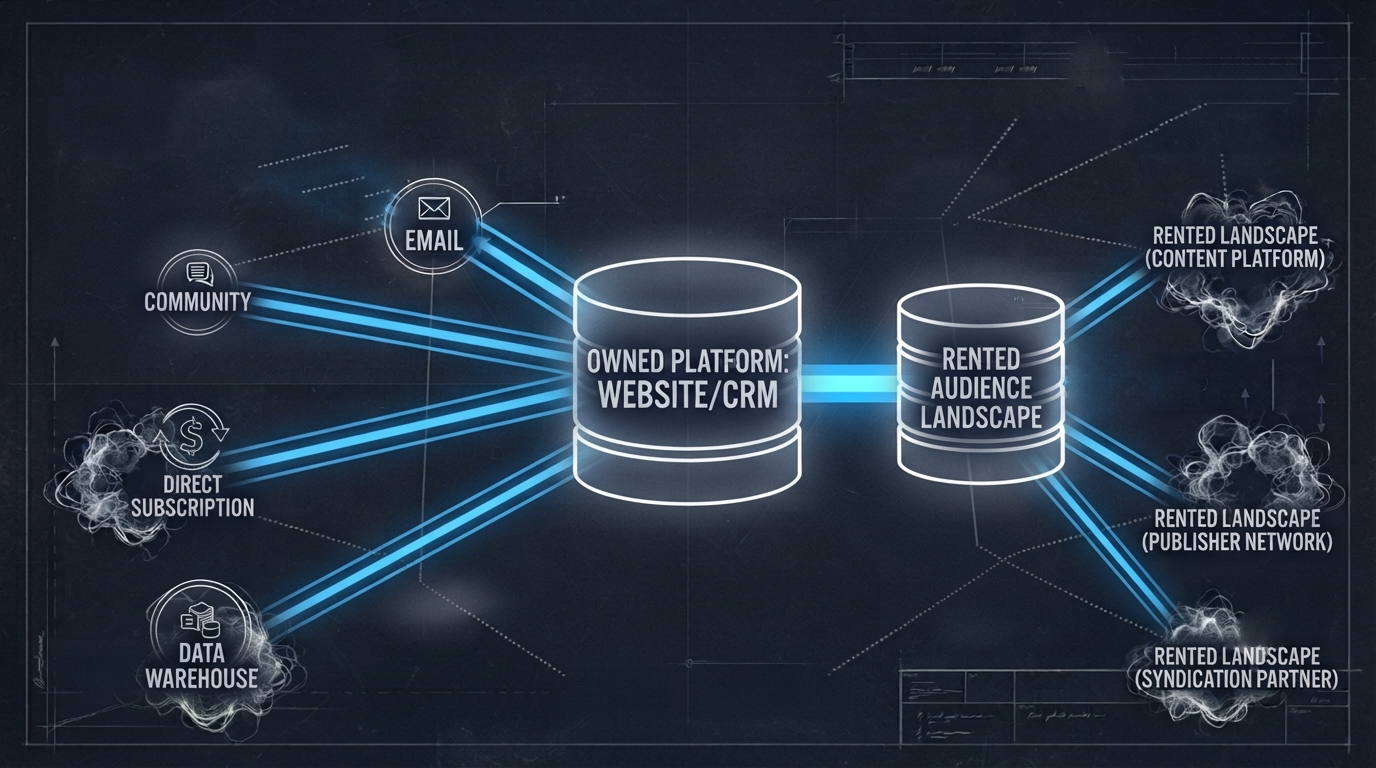
True independence begins by reclaiming the direct line of communication with your audience. This means shifting your primary strategic goal from gathering passive followers to capturing direct, permission-based contact vectors, primarily through owned email and messaging infrastructure.
Building a proprietary distribution pipeline requires offering asymmetric value in exchange for an email address or direct contact detail. You cannot rely on a generic newsletter signup box tucked away in a website footer. Modern consumers are fiercely protective of their inboxes. You must create standalone assets, such as deep-dive research reports, interactive software tools, exclusive community access, or specialized newsletters that deliver immediate, tangible utility.
Once a user enters your owned ecosystem, the dynamic changes entirely. You control the delivery mechanism. You control the frequency, the formatting, and the narrative. If a major social platform disappears tomorrow, your business remains completely intact because your customer relationships live on a server and in a database that you control.
Cultivating Defensible Community Assets
Email is the foundational layer of owned distribution, but true resilience comes from building peer-to-peer community assets. When customers interact not just with your brand, but with each other inside an ecosystem you manage, your platform transforms from a simple vendor into a central hub for their industry or interest.
Creating this kind of defensible community requires moving away from public social groups hosted on rented platforms. It means investing in private, dedicated spaces where discussions run deep, high-value networking occurs, and proprietary content is housed.
When your audience finds genuine professional or personal utility inside your private ecosystem, switching costs skyrocket. They are no longer just consuming your content; they are embedded in a network that provides ongoing value. That level of loyalty cannot be disrupted by an algorithm tweak or a competitor’s ad spend.
Transitioning From Rent-Seekers to Independent Operators
Leaving the rent-seeking web requires a fundamental reallocation of your marketing energy. For every hour you spend trying to game the latest social media trend or optimize for a volatile algorithm, you should be investing time into strengthening your owned assets.
This transition takes patience. Growth on proprietary channels is rarely viral overnight, and it requires deliberate, consistent effort to build trust. However, every subscriber who joins your email list or enters your private community represents a permanent compounding asset.
Founders who master this transition stop viewing distribution as something they have to beg platforms for. They build self-sustaining channels that insulate their business from external shocks, protect their margins, and secure their long-term survival in an unpredictable digital world.