
The Trust Moat: How to Build an Unreplicable Brand Fortress
When you stop optimizing for broad reach and start embracing intentional churn, your operational landscape shifts entirely. You are no longer managing a fragile, bloated crowd of casual browsers. You are looking at a concentrated core of high-intent practitioners. But surviving the attention economy and filtering the noise are only the defensive phases. The ultimate objective is establishing an impenetrable competitive advantage: the Trust Moat.
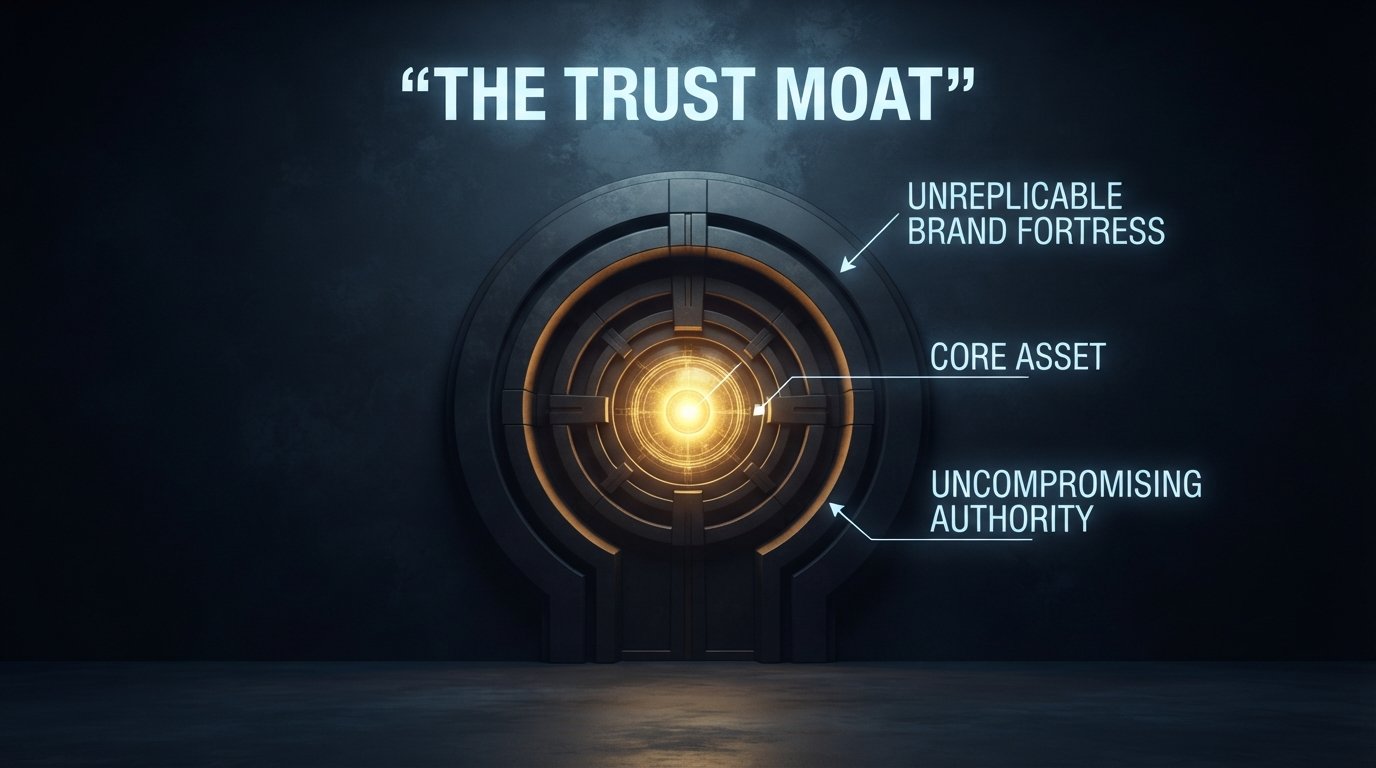
A trust moat cannot be bought through ad spend, nor can it be reverse-engineered by competitors copying your feature set or content cadence. It is forged through consistent, uncompromising authority and deep ideological alignment with your core audience. In an era where AI-generated content and superficial marketing have flooded every digital channel, trust is the ultimate scarce asset.
The Anatomy of an Unreplicable Asset
Traditional business moats relied on distribution monopolies, heavy capital requirements, or proprietary technology. In the digital publishing and modern creator space, those moats have eroded. Platforms change algorithms overnight, software tools are commoditized, and competitors can clone your public output in minutes using automated systems.
The only moat that survives platform volatility is psychological and relational. When your audience trusts your judgment more than their own initial instincts, you possess pricing power and market resilience that no algorithm can penalize. This requires shifting your editorial posture from pleasing everyone to standing firmly for specific, non-negotiable principles. You must be willing to alienate the market to deeply captivate your target demographic.
Monetization Without Friction
Monetizing a high-trust audience requires an entirely different philosophy than traditional transactional marketing. When trust is absolute, you do not need aggressive sales funnels, high-pressure countdown timers, or perpetual discounting. Those tactics are designed for low-trust environments where the buyer is inherently skeptical of the seller’s intent.
Instead, monetization becomes an organic extension of your editorial stance. Premium products, high-ticket advisories, or specialized digital assets sell themselves because they solve immediate, high-stakes problems for an audience that already views you as an indispensable peer. Frictionless commerce is the direct byproduct of accumulated trust. Your customers do not evaluate your offers based on whether they can find a cheaper alternative; they buy because they know the framework comes from the exact source they rely on for intellectual clarity.
Defending the Fortress Long-Term
Maintaining a trust moat demands radical consistency. A single compromised sponsorship, a shift toward chasing algorithmic trends, or a dilution of your core message can drain years of accumulated brand equity in an afternoon.
You protect the moat by guarding your operational boundaries. Say no to revenue streams that misalign with your core ethos. Refuse to cater to the lowest common denominator for short-term traffic spikes. By maintaining a fortress-like standard for what enters your ecosystem, you ensure that your brand remains an enduring authority while competitors burn out trying to capture fleeting attention.